Combined or Separate Ceremonies for a Multicultural Ghanaian Wedding
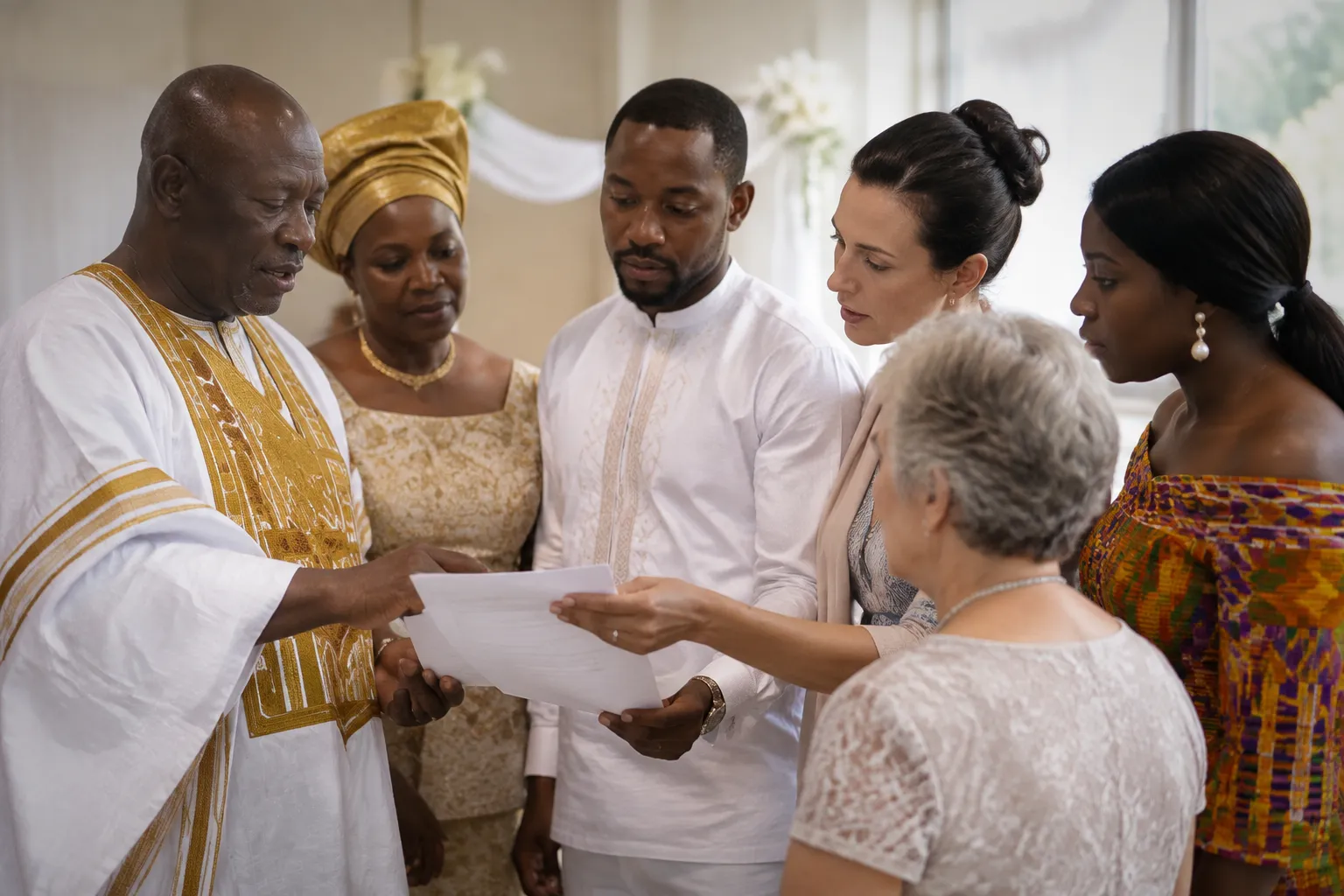
For a multicultural Ghanaian wedding, combine ceremonies when both families agree on the sequence, participants, locations, and timing. Keep them separate when different cultural groups, faith settings, or family responsibilities need more preparation time. The family spokesperson or an agreed elder should settle the customary sequence before the planner or venue contact builds the schedule.
What the Two Arrangements Mean
A combined arrangement places related events on the same day or within one coordinated programme. A customary engagement or knocking ceremony might come before a church ceremony and reception, with the couple, relatives, guests, and suppliers moving through an agreed sequence.
A separate arrangement gives the customary, faith, civil, or reception events different dates or distinct time blocks. This can give each group more room to prepare speakers, elders, clothing, language support, family items, and religious arrangements.
Research on Ghanaian marriage practices uses terms such as “parallel marriage ceremonies” and “double marriage” for situations involving more than one ceremony. These terms describe documented patterns and reader language. They do not show that every couple needs two ceremonies or answer a current registration question.
Start With the Family Conversation
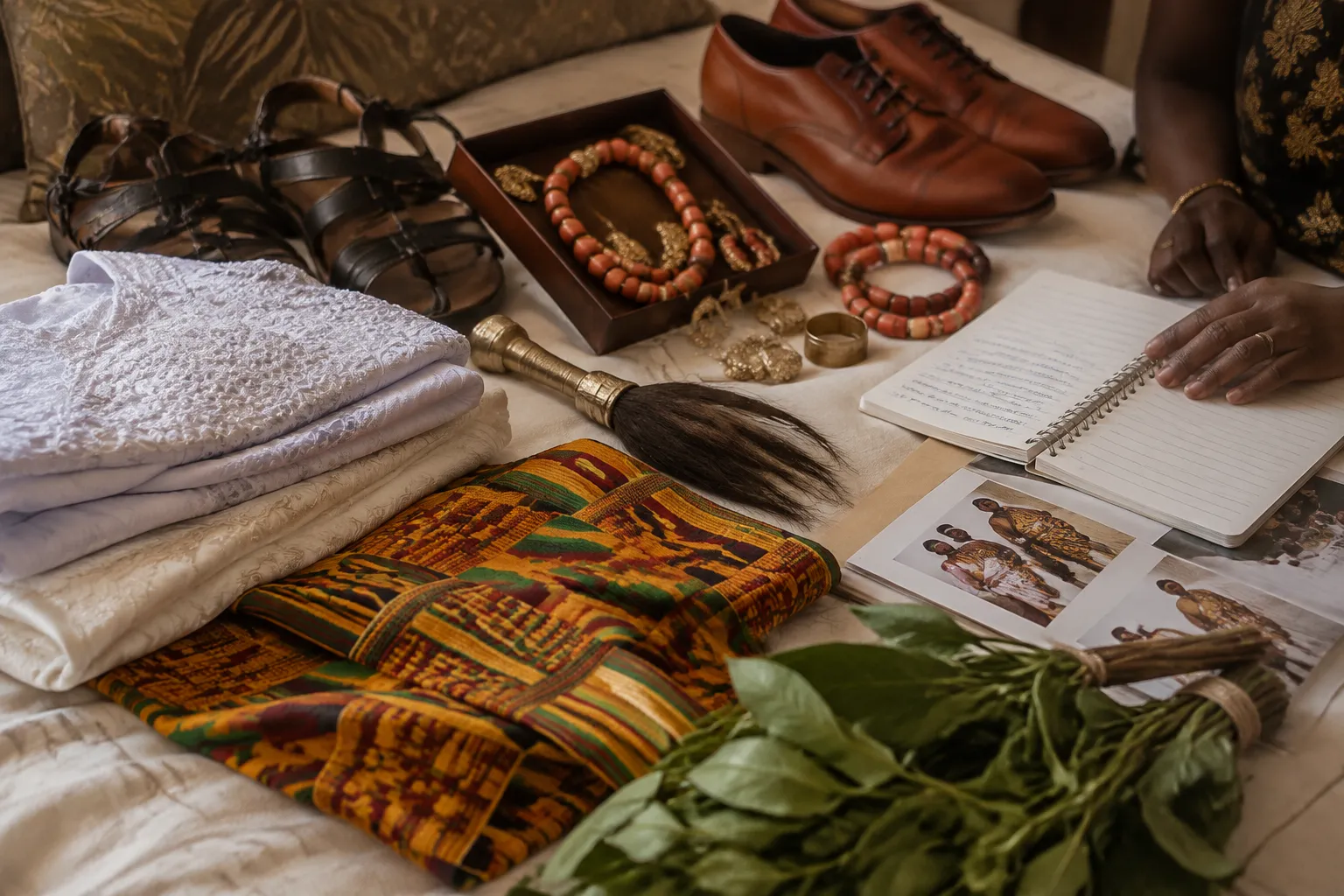
The first decision is not the venue date. It is which ceremonies each family considers necessary, preferred, or optional for this couple.
Ask the family spokesperson to bring the relevant elders together and record clear answers to these questions:
- Which customary engagement, knocking, or marriage steps does each family expect?
- Who will speak and present items for each family?
- Which parts need to happen before a church, other faith, or civil ceremony?
- Which details reflect family preference rather than a requirement of the cultural group or faith setting?
Customary practice varies across Ghanaian communities and families. Akan scholarship describes customary marriage elements without presenting one fixed performance script. Research on Krobo marriage rites describes a community-specific sequence, but that example should not become a general Ghanaian checklist.
The useful confirmation question is: “Which sequence are our two families agreeing to, and who can confirm an item that either family does not recognize?”
When Combined Ceremonies May Fit
Combining ceremonies may suit a couple when the families agree on the order, required participants can arrive on time, and the locations are close enough for the handoffs to work.
A same-day plan can reduce repeated journeys for relatives and guests. It may also allow one planner, transport lead, photography team, or venue team to coordinate the whole programme. These are practical advantages, not a promise of lower cost or easier preparation. Research on parallel ceremonies connects multiple events with added preparation and financial pressure, but it does not show what one particular couple will spend.
One person should own the running order. The timetable should record:
- when each family representative must arrive;
- when customary items or documents are presented;
- how guests move between locations;
- the time reserved for the church, faith, or civil ceremony;
- when the reception begins;
- which moments require the photographer’s access.
The planner or venue contact can turn the agreed sequence into a working schedule. The family spokesperson remains responsible for confirming that the schedule reflects the intended ceremony.
When Separate Ceremonies May Fit
Separate ceremonies may be more suitable when the families follow different customary practices, the couple has different faith commitments, or relatives and participants are travelling from different places.
A separate date can give each family time to prepare its speakers, elders, clothing, language support, and customary items. It can also prevent a knocking ceremony from being treated as a short opening segment when the families expect a fuller exchange or presentation.
Language planning deserves an early decision in an inter-ethnic wedding. Research on traditional marriage ceremonies in southern Ghana describes family representatives shifting between languages to manage communication between in-laws. Ask which speakers can address both families clearly, whether interpretation is needed, and who will explain the meaning of important exchanges.
Separate dates create additional handoffs. After each date is confirmed, assign someone to update relatives, the faith representative, the civil-registration contact, venue teams, the photographer, and the transport lead.
Agree the Sequence Instead of Assuming It
A commonly described planning pattern may include a customary engagement or knocking ceremony followed by a church, other faith, civil, or reception event. The available research does not support one universal Ghanaian wedding ceremony sequence.
The order may change because of:
- the cultural groups represented by the couple;
- each family’s customary expectations;
- the couple’s faith setting;
- the relevant officiant’s location and availability;
- guest travel between venues;
- the people required to speak, sign, present, or witness particular moments.
The person handling civil or registration matters should check current requirements directly with the relevant public authority for the applicable jurisdiction and date. The available material does not provide a current public-authority source that can answer a specific couple’s registration or marital-status question.
Keep civil matters separate from family custom and faith scheduling. Combining ceremonies does not by itself show that registration has been completed, and separating them does not by itself show that a ceremony is incomplete. Case-specific status questions belong with the relevant authority or a qualified legal professional.
Compare the Main Dependencies
| Planning question | Combined ceremonies | Separate ceremonies |
|---|---|---|
| Family coordination | One shared running order must be agreed. | Each event can have its own family lead. |
| Guest travel | Fewer dates may reduce repeated journeys. | Guests may need to plan for more than one date. |
| Venue planning | Locations and programme sections must connect closely. | Each date can use a simpler schedule. |
| Faith coordination | The faith representative confirms timing within a longer day. | Preparation and ceremony timing can be handled independently. |
| Photography | The photographer needs the complete order of arrivals, exchanges, and locations. | Each event can be planned as its own assignment. |
| Civil or registration matters | These still require separate confirmation. | These still require separate confirmation. |
This comparison concerns coordination effects, not cultural value. A family may prefer one day for travel reasons, while another may prefer separate dates to give each ceremony its own time.
Assign the Handoffs Before Booking
- Family spokesperson or elder: confirms the customary sequence, family representatives, language needs, and items to be presented.
- The couple: makes the final decision about dates, guest priorities, and unresolved questions requiring further discussion.
- Faith representative: confirms preparation expectations, ceremony timing, and conditions set by the relevant faith community.
- Civil or registration contact: checks the current formal process and documents with the relevant public authority.
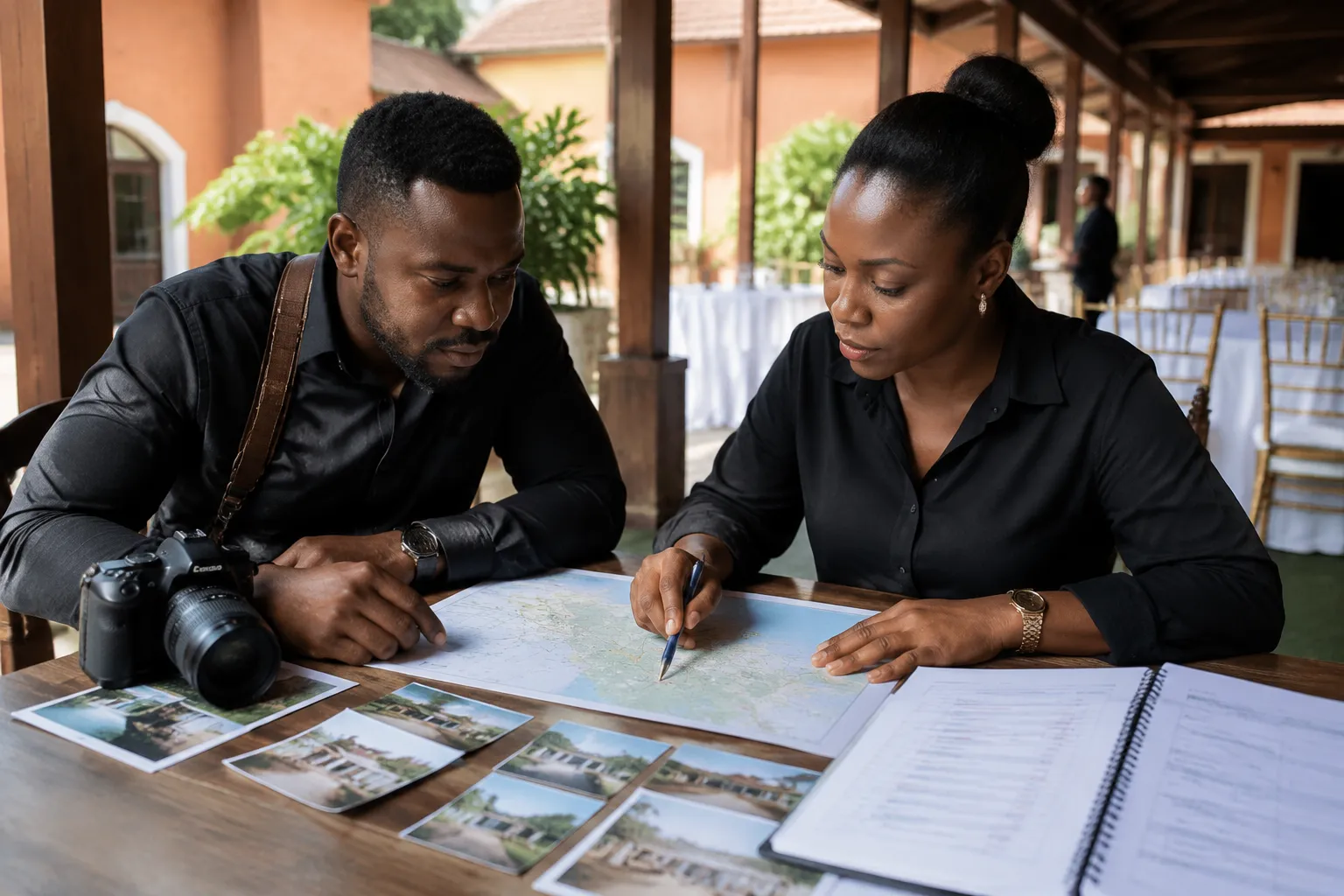
- Planner or venue contact: coordinates room access, arrivals, movement between spaces, programme order, and supplier timing.
- Photographer: receives the locations and moments requiring coverage before, during, and after each ceremony.
- Transport lead: records pickup times, venue transfers, and relatives who need assistance moving between locations.
A photographer may need separate instructions for customary exchanges, a church or faith ceremony, signing moments, and the reception. Photography research supports this as a logistics consideration: locations, arrivals, ceremony actions, and post-ceremony scenes affect how a multi-part wedding is recorded. It does not establish Ghanaian ceremony requirements.
The Decision to Record
Ask both families to complete this sentence:
“For our multicultural Ghanaian wedding, which ceremony or ceremony section needs its own time, and who can confirm that decision?”
Record the answer beside each event:
- ceremony or event name;
- family, faith, civil, or reception purpose;
- responsible confirmation person;
- required participants and language support;
- location and arrival dependency;
- date or time that remains unconfirmed.
If the families cannot agree on the sequence, return the question to the family spokesperson and relevant elders rather than asking the venue or photographer to decide it. Send faith questions to the relevant faith representative, and check registration or formal-status questions through the current jurisdiction-specific process.
The practical choice is to combine ceremonies when the people, sequence, locations, and timing can be confirmed together. Separate them when different families, faith settings, or practical dependencies need distinct preparation. Record the confirmation owner for each ceremony before dates and supplier arrangements are treated as final.
Sources
- Essentials of an Akan Customary Marriage
- Decolonizing The Parallel Marriage Ceremonies in the Ghanaian Context
- Agents and challenges associated with the celebration of parallel marriage ceremonies in Winneba township in the Efutu municipality of Ghana
- Between Tradition and Modernity: Dynamics of Krobo Marriage Rites in the Eastern Region of Ghana
- “Look me, hwε ha, ofainε kwεmɔ biε aha mi fioo!!”: Codeswitching at inter-ethnic traditional marriage ceremonies in southern Ghana
- Premarital Counseling Practices among Christian and Muslim Lay Counselors in Ghana
- ‘If it’s Your Money, I Will Pay and Go’: Shifting and Contested Significance of Brideprice Payment among the Dagaaba of Northwest Ghana
- For Ever and Ever the Perfect Wedding Picture: Converging Religious and Secular Norms and Values in Wedding Photography