Carrying, Shipping, Renting, or Sourcing Wedding Items in Ghana
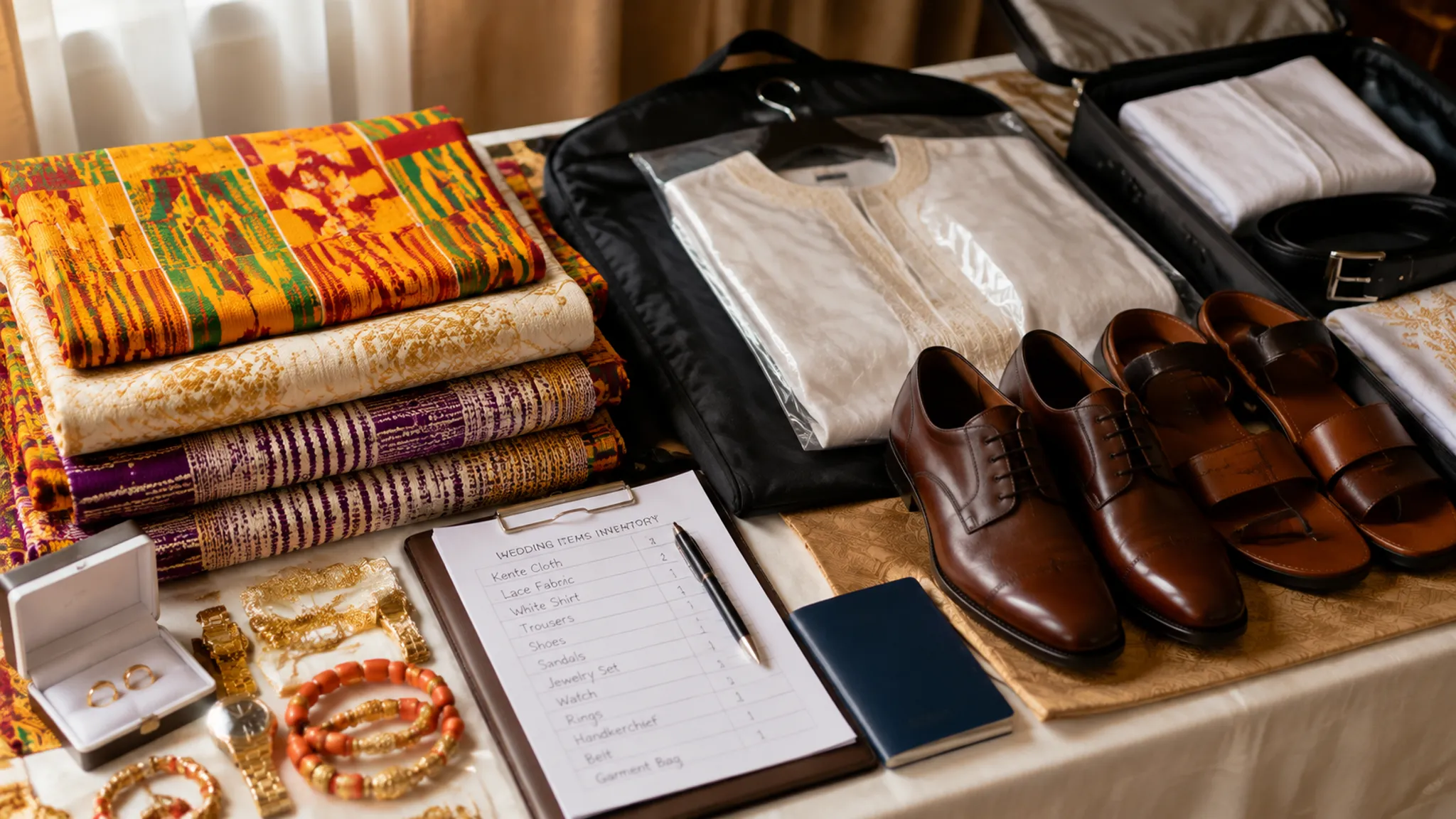
When a family meeting or travel date is approaching, the practical question is not only how an item will move. Someone needs to own it, confirm its destination, set the usable deadline, and handle the next handoff if the first plan changes.
A wedding dress, engagement fabric, presentation item, shoe, gift, accessory, or décor piece may follow a different route. One relative may carry a garment, a local maker may produce an accessory, and a provider may supply a rental item. Treating them as one shipment makes responsibility difficult to trace.
Use the four options on this page as an item-by-item comparison. Record the owner, receiver, arrival deadline, condition check, backup plan, and remaining family or provider confirmation.
Start With the Item
Separate the items before choosing a transport or sourcing method. Their size, fit, ceremony use, cultural meaning, and timing can change the answer.
- Ceremony clothing: wedding dress, groom attire, family clothing, matching fabrics, wraps, and accessories.
- Engagement and presentation items: requested gifts, symbolic materials, containers, and other items presented during a customary engagement or knocking ceremony.
- Footwear and personal accessories: shoes, beads, jewellery, headpieces, bags, and belts.
- Décor and reception items: textiles, table pieces, signage, backdrops, and assembly parts.
- Small records: schedules, receipts, measurements, contact details, and inventories.
A fitted wedding dress needs a different handoff from a folded length of fabric. A family-specific accessory may need approval before purchase. A rented item carries collection and return conditions that do not apply to something sourced locally.
| Planning point | Question to record |
|---|---|
| Owner | Who is responsible from purchase or dispatch through handover? |
| Destination | Where will the item first arrive, and where will it be used? |
| Deadline | When is it needed for fitting, presentation, photography, or the ceremony? |
| Receiver | Who accepts and checks the item? |
| Condition | What needs to be inspected on arrival or collection? |
| Backup | What can replace it, and who can approve that change? |
| Confirmation | Which family member, provider, or responsible institution still needs to agree? |
This record does more than a general packing list. It shows where responsibility changes and which conversation remains open.

Flying With a Wedding Dress to Ghana
Wedding dress travel to Ghana involves several separate decisions: who carries the dress, how it is packed, where it is kept after arrival, and who manages fitting or alterations.
Ask the airline or relevant travel provider about the current policy for the specific ticket, baggage allowance, cabin arrangement, and garment packaging. The available material for this page does not verify a current airline position, so a family schedule should not be treated as a provider commitment.
Record the traveller as the journey owner and give that person the receiving details, fitting deadline, alteration instructions, and a backup contact. The receiver should check the garment promptly, including the fastening, lining, embellishments, accessories, and visible alteration needs. This is a coordination record, not a promise about handling or arrival condition.
A church ceremony may not be the only clothing checkpoint. A customary engagement, reception, or family photography session may involve different fabrics, styling choices, or people. The couple and family spokesperson should agree which look belongs to which event.
Questions Before Departure
- Who carries the dress from departure to Ghana?
- Who receives it, and where?
- Where is it stored before fitting?
- What is the latest fitting date?
- Who approves or pays for alterations?
- Are shoes and accessories travelling separately?
- What approved alternative is available if the dress is delayed or unsuitable?
- Which current airline instructions apply to this journey?
Carrying Wedding Items to Ghana
Carrying can suit smaller personal pieces when a named traveller can manage them through the journey and hand them directly to the receiver. Make the decision per item rather than assuming one traveller should manage everything.
Give the carrier an inventory showing the item, quantity, owner, destination, and receiver. Keep family gifts and presentation items separate from unrelated personal luggage so the receiving family can identify them without opening other bags.
The family spokesperson should confirm whether an item is intended for the knocking ceremony, customary engagement, church ceremony, civil ceremony, reception, or photography. These events may occur on different days and involve different people. An item intended for one ceremony should not be assigned only to someone attending another.
For clothing and accessories, add a fit or condition checkpoint. Research on Ghanaian bridal design and clothing can provide useful context for discussing contemporary garments and culturally meaningful design elements, but it does not establish one required design for every family.
A clear handoff might record: Ama carries the bridal shoes; Kojo receives them at the agreed location before fitting; Kojo checks the size, colour, pair, and embellishments; then he confirms to the couple. The example clarifies responsibility, but it cannot prove that the shoes, timing, or design suit every wedding.
Shipping Wedding Items to Ghana
Shipping creates a different responsibility chain. The sender hands the item to a courier or freight provider, while the receiver manages collection, inspection, and onward delivery.
The available research does not verify current courier documents, customs treatment, charges, delivery timelines, or provider performance. Before dispatch, obtain those details from the selected provider and the relevant public authority for the journey's date and destination.
Confirm the required item description, sender and receiver details, delivery or collection point, documents or declarations, realistic arrival date, and responsibility for additional charges. Also ask how the provider handles a delayed, held, damaged, or redirected item and what information the receiver needs for collection.
Send the receiver the tracking or consignment information and a copy of the inventory. Record the final usable date, not only the ceremony date. An item arriving after the engagement may still serve a reception, but only if the family agrees to that change.
Shipping and Customs Confirmation Point
Do not describe an item as cleared, accepted, or permitted without current confirmation from the relevant provider or authority. Ask whether the item is for personal use, family presentation, sale, or another purpose; what description or value is required; who responds to additional questions; and where collection moves if delivery changes.
These are operational questions, not cultural rules. A family preference does not replace a formal procedure, and the material supplied for this page does not include current Ghana customs guidance.
Renting Wedding Items in Ghana
Renting can reduce the number of items that travellers or couriers handle. The arrangement still depends on the provider's current terms, including availability, fitting, deposits, condition, collection, and return.
Assign one person to confirm the arrangement in writing. Record the exact item or design, measurements, fitting date, use and return dates, collection location, condition at collection, alteration permissions, payment terms, late-return responsibility, and an alternative if the item is unavailable.
A rented dress may need a fitting checkpoint. An accessory may need to match a family-approved fabric or design. A reception item may have a return deadline that differs from the ceremony schedule. Where the provider's terms allow it, the collecting person can record the item's condition at handoff.
Ask who approves a size change, when responsibility transfers to the renter, who may return the item, and what happens if the ceremony schedule changes. A rental plan is incomplete until collection and return have named owners.
Sourcing Wedding Items in Ghana
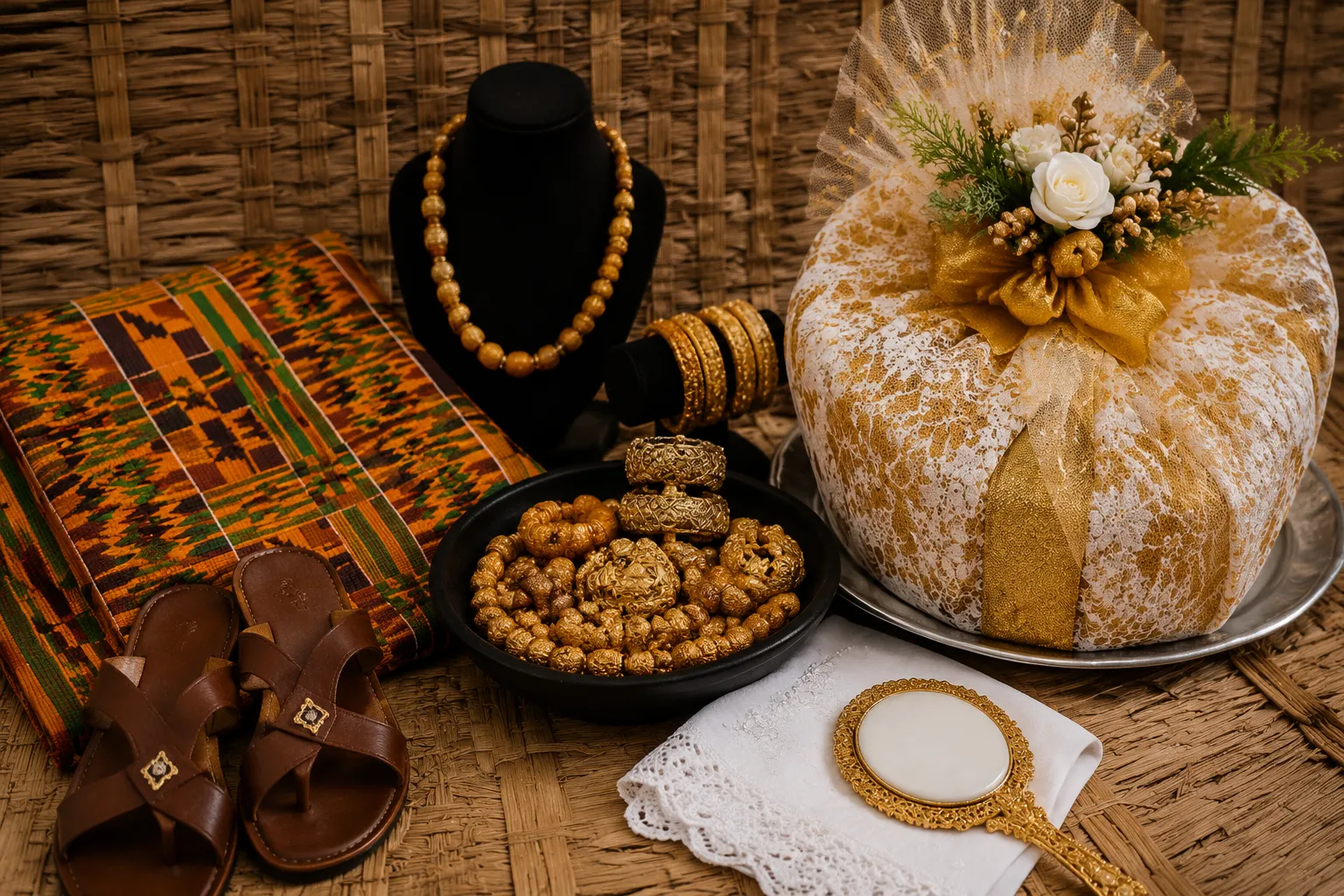
Sourcing in Ghana may mean commissioning a maker, buying from a retailer, asking a relative to purchase an item, or combining local and imported elements. These routes have different dependencies.
Research on Ghanaian bridal design describes ways contemporary garments may incorporate Akan symbols, colours, fabrics, or other meaningful elements. Use that context to discuss what the couple or family wants; do not treat a symbol, colour, or garment as required for every Ghanaian wedding.
Research on ready-to-wear clothing in the Ashanti region identifies factors such as accessibility, quality expectations, purchasing power, design appeal, and production constraints. These are useful supplier questions, not evidence about a particular business's current performance.
For a local request, confirm whether the item is made, altered, or ready-made; who supplies measurements; who approves the materials and design; which details are family-specific; when the first fitting occurs; who receives the finished item; and whether the maker or retailer has confirmed the deadline.
The person placing the order should not be the only person who knows the required design. Share a written description with the couple, relevant family spokesperson, and maker where appropriate.
Fit, Measurements, and Alterations
Remote ordering and local sourcing both need a clear fit owner. Treat measurements, body shape, quality expectations, and alterations as separate checkpoints rather than assuming a standard size settles the issue.
- Who takes or supplies the measurements?
- When were they taken, and which garment do they describe?
- Who checks the first fitting?
- Who approves alterations?
- When is the final fitting?
- Who receives the garment after completion?
A measurement record creates a shared checkpoint. It does not prove that the garment will fit.
Footwear deserves its own decision. A bounded Kumasi example involving kente, beads, and bridal footwear can help a couple discuss materials, beadwork, and shoe form. It does not establish a universal preference, current price, or provider availability.
Comparing the Four Options
The useful comparison is the next dependency each route creates, not a ranking of the options.
| Option | May suit | First confirmation | Backup question |
|---|---|---|---|
| Carrying | A named traveller who can manage the item through handoff | Traveller, receiver, and current travel policy | Who can receive or replace it if plans change? |
| Shipping | An item that can travel separately while the receiver manages delivery | Provider documents, destination, and expected arrival | What happens if it is delayed, held, or redirected? |
| Renting | An item with confirmed fitting, use period, condition, and return terms | Written rental and condition details | What alternative is available at collection? |
| Sourcing in Ghana | A local maker, retailer, or relative who can confirm design and deadline | Design, measurements, quality expectations, and receiver | Who approves an alteration or design change? |
A couple might carry a personal accessory, source a fitted garment locally, and rent a reception item. That combination can be workable when every item has a separate owner and confirmation point. It is not a standard Ghanaian practice or a guaranteed solution.
Timing and Handoffs
Work backward from the first moment each item is needed.
- Before purchase or dispatch: confirm the item, owner, destination, ceremony use, and family preference.
- Before travel or collection: verify current provider or maker terms and the receiver's availability.
- On arrival or collection: inspect the item and record its condition.
- Before fitting or presentation: confirm size, design, quantity, and intended ceremony.
- Between ceremonies: move the item through an assigned handoff.
- After the event: return, store, alter, reuse, or pass on the item according to the owner's decision.
The sequence may change. A local fitting can happen before a relative arrives with accessories, and a knocking ceremony may precede a church ceremony. Confirm the family's actual order rather than assuming one timeline.
Photography adds another checkpoint. If an item is needed for family portraits, detail photographs, or a ceremony entrance, tell the photographer or planner who controls it and when it will be available. Arrival before the ceremony is not enough if the item misses the scheduled photographs.
Every Handoff Needs Four Answers
- Who gives the item?
- Who receives it?
- What does the receiver check?
- What happens next?
Avoid assigning an item to “the family” or “the bridal party” without naming one accountable person. For clothing, check fastenings, lining, embellishments, accessories, and visible alteration needs. For shoes, check the pair, size, decoration, and damage. For fabric, check quantity, colour, pattern, and recipient. For décor, check pieces, assembly parts, and delivery quantity.
Record the date, receiver, item description, observed condition, missing parts, person notified, next action, and deadline. This record supports one wedding's coordination; it does not establish that a carrier, provider, or maker is reliable.
Backup Planning
“Find another option” is not an assigned backup. One person should be able to activate the alternative after the couple and relevant family spokesperson agree.
- Use a second outfit already approved by the couple.
- Change an accessory while keeping the main garment.
- Source a local replacement after confirming design expectations.
- Move the item to a later ceremony if the family agrees.
- Adjust the photography schedule.
- Ask the provider or maker for a confirmed alternative.
- Reassign collection or delivery to another named relative.
A backup may change the appearance or order of the ceremony. Record who approves that change and when the decision becomes necessary.
Common Misunderstandings
Carrying and shipping are the same
They create different handoffs. A traveller manages the item through the journey, while a shipping provider manages transport under its current process. The receiver and confirmation points therefore change.
Local sourcing removes timing risk
Local sourcing can still involve measurements, design approval, production, fitting, collection, and alteration. Confirm each stage with the maker, retailer, or responsible relative.
A family example establishes a cultural rule
One family's engagement list, presentation format, fabric choice, or ceremony order cannot establish what every Akan, Ewe, Ga, or multicultural family expects. Ask the relevant family spokesperson.
A design reference proves a requirement
Academic work on Akan symbolism, bridal design, Ghanaian clothing, or footwear can provide context and vocabulary. It does not show that a particular motif, colour, shoe, or garment is required.
A planned arrival is confirmed arrival
A date in a family schedule is not the same as a current provider commitment. Record who confirmed the timing and what happens if the item misses it.
Final Confirmation Sheet
Before closing the plan, ask the couple, family, traveller, provider, or maker to record:
- What the item is and who owns it.
- Whether it will be carried, shipped, rented, or sourced.
- Where it will arrive and who receives it.
- The latest usable date.
- The condition or fit to be checked.
- Who approves the design, size, or family preference.
- The person who activates the backup.
- Which current provider or public-authority information remains to be checked.
For formal travel, customs, registration, or provider-policy questions, use current information from the responsible authority or provider for the relevant jurisdiction and date. The material available for this page does not verify those changeable procedures.
Choose the route separately for each wedding item. Carry it when a named traveller can manage the handoff. Ship it after the provider, destination, receiver, and current requirements are confirmed. Rent it when the item, fitting, condition, collection, and return terms are clear. Source it in Ghana when the maker, retailer, or relative can confirm the design, measurements, deadline, and receiver.
The plan is ready for the next stage when one person can state what happens next. Record what was agreed, who owns it, and when it is needed; then leave any remaining local question with the appropriate family spokesperson, provider, or responsible institution.
Sources
- Adaptation of Traditional Symbols into Bridal Wear
- Challenges and prospects of ready-to-wear garment manufacturing and retail in Ghana: a case study of the Ashanti region
- Development of a conceptual framework relating to ready-to-wear clothing for Ghanaian women for manufacturing strategies
- Beaded Kente Ladies Shoe (Stilettos) for Contemporary Ghanaian Traditional Weddings