Knocking vs. Traditional Engagement: What Does Each Family Mean?
In Ghanaian wedding planning, “knocking ceremony” and “traditional engagement” may describe the same gathering, two connected stages, or different family events. The label alone does not establish the event’s purpose, participants, items, sequence, or formal significance.
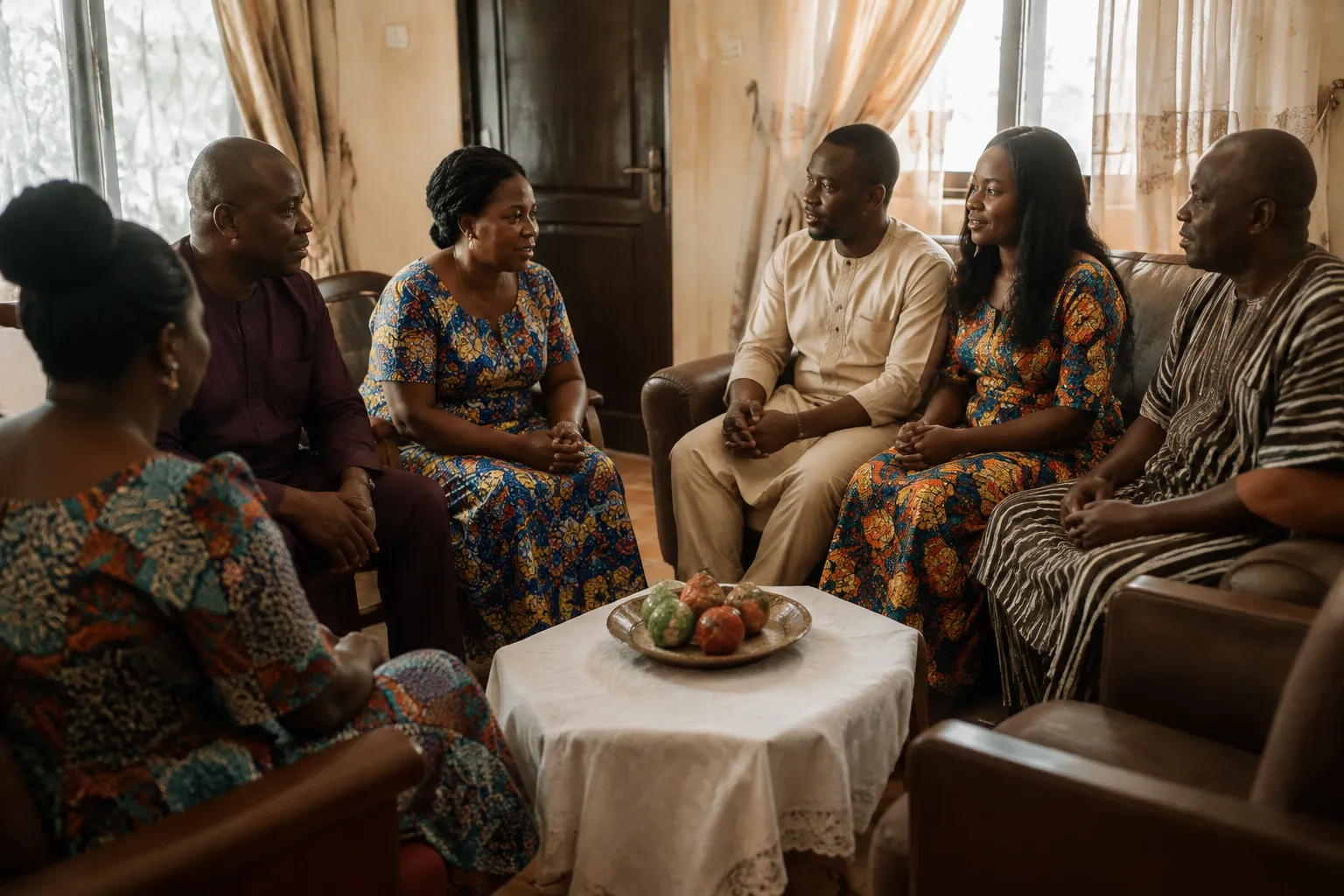
Before booking a venue, inviting relatives, or arranging travel, ask the family spokesperson or elder: “Are knocking and traditional engagement the same event in our family, or are they separate?” The answer should guide the date, guest list, preparation, and handoffs to the planner or photographer.
What might “knocking ceremony” mean?
The phrase may describe an initial visit in which one family approaches or introduces itself to the other. In some families, the emphasis may be on announcing intentions, requesting a relationship between the families, or opening a conversation about marriage.
In another family, “knocking” may refer to a more developed customary gathering. The word itself does not confirm how long the event will last, who will speak, what may be presented, or whether another engagement follows.
When we say “knocking ceremony” in this family, do we mean the first family visit, the customary engagement, or both?
This clarification can prevent one relative from planning a brief introduction while another prepares for a larger ceremony.
What might “traditional engagement” mean?
“Traditional engagement” may describe a customary gathering through which families acknowledge the couple’s proposed marriage. It may also refer to the wider period after the families agree to proceed.
Some relatives use the term to distinguish a customary family event from a church ceremony, civil ceremony, or reception. Others use it for several connected customs rather than one fixed date. The term does not, by itself, settle the family’s local interpretation or formal marital status.
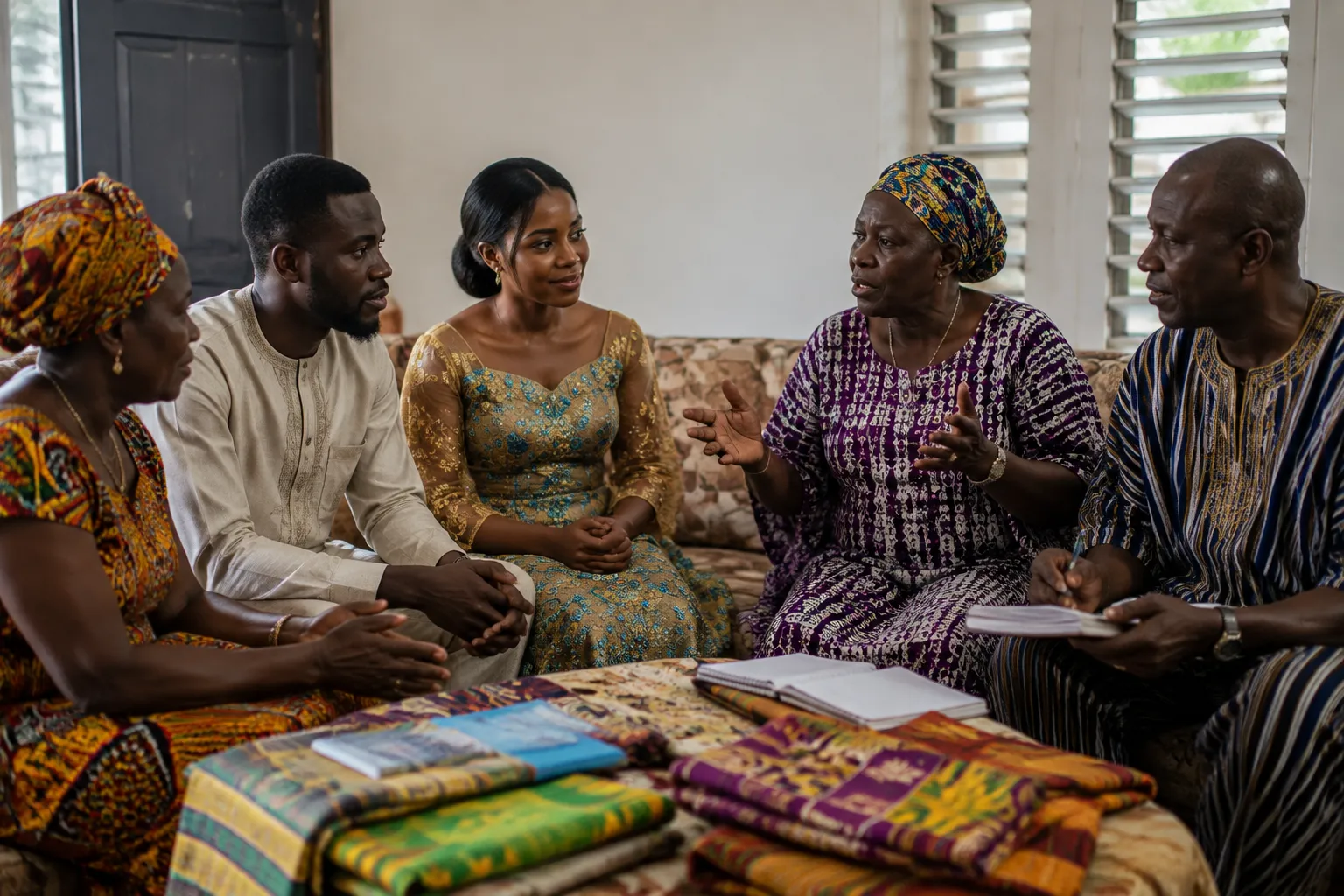
Knocking Ceremony vs. Traditional Engagement: The Planning Difference
| Family interpretation | Planning consequence |
|---|---|
| The terms mean the same event | Confirm one date, one spokesperson, and one preparation list. |
| Knocking comes before traditional engagement | Record what is decided at the first gathering and what waits until the later event. |
| The terms overlap but are not identical | Confirm which elements belong to each gathering and whether guests attend both. |
These are planning possibilities, not universal Ghanaian categories. The family’s own interpretation determines the practical arrangement.
Why the Terms May Differ
Ceremony language can vary across relatives, cultural groups, faith communities, regions, and diaspora households. A couple may use a wedding-planning term that does not match the wording preferred by an elder.
To reduce confusion, record four details:
- the name each relative uses;
- the purpose assigned to the gathering;
- the people expected to attend or speak;
- the decisions that should be completed before the date.
“Engagement” may describe a ceremony, a preparation period, or family approval. “Knocking” may describe an approach, a visit, or a named customary stage. The family spokesperson should confirm which meaning applies in this case.
Who Should Confirm the Meaning?
Begin with the person coordinating the family’s customary arrangements. This may be a family spokesperson, elder, parent, or another relative selected by the family.
The couple should avoid relying on separate assumptions from both sides. Ask one agreed representative to explain the interpretation to the couple and planner, then record the answer in the planning notes.
Please confirm whether our knocking ceremony and traditional engagement are the same event. If they are separate, what is the purpose of each, who should attend, and what decision should be completed between them?
What to Confirm Before Scheduling
- Event meaning: What does the family mean by “knocking ceremony”?
- Event relationship: Is traditional engagement the same event, a later event, or a broader term?
- Family roles: Who will speak, receive the visiting family, or communicate the agreed position?
- Preparation: What should the couple or relatives prepare, present, or bring?
- Attendance: Which relatives are expected, and will traveling guests be involved?
- Timing: How much time is needed between the gatherings if they are separate?
- Handoffs: Who will tell the planner, photographer, venue, and wider family what was agreed?
- Formal questions: Who should answer questions about registration, customary recognition, or marital status?
The available material does not verify one Ghanaian sequence, item list, family-role structure, or formal legal effect. Treat those details as family-specific until they are confirmed through an attributable Ghanaian cultural source or the relevant current authority.
A Bounded Example
In one family example, relatives use “knocking” for the first visit to introduce the groom’s family. They use “traditional engagement” for a later gathering involving wider relatives and customary arrangements.
The couple could record two planning entries:
- Knocking ceremony: family introduction, assigned spokesperson, expected attendees, and agreed date.
- Traditional engagement: confirmed purpose, preparation responsibilities, wider guest communication, and timing dependency.
If another relative uses both names for one event, pause the booking process and ask the spokesperson to resolve the wording. This example shows how terminology can affect scheduling; it does not establish a sequence for Ghanaian families generally.
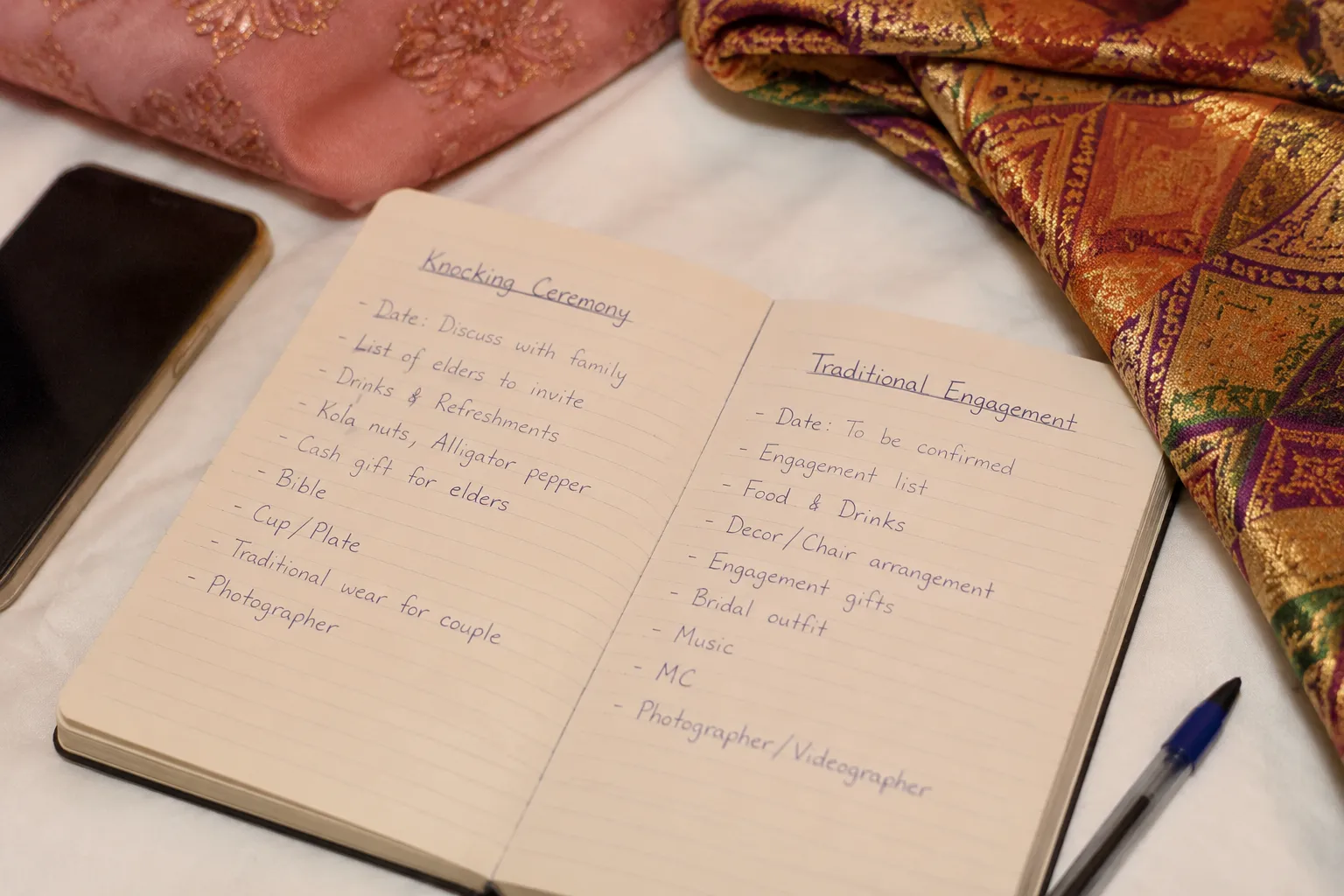
Do Either Terms Confirm Marriage or Registration?
No conclusion about marriage validity, registration, or formal recognition should be drawn from the terms alone. The available material does not provide a current Ghanaian authority source for those questions.
For a case-specific answer, identify the relevant jurisdiction and ask the appropriate registrar or qualified legal professional about current procedures. Keep that formal question separate from the family’s explanation of what the ceremony means.
The Next Question to Ask
Ask the family spokesperson: “What does each event mean in our family, and what needs to be confirmed before we invite people or book suppliers?”
Assign one person to record the answer and communicate it to the couple, relatives, planner, photographer, and traveling guests. Once the family agrees whether the events are identical, separate, or overlapping, the next planning step can be scheduled with fewer assumptions.
Sources
No external references were available in the supplied source set. Formal questions about registration, customary recognition, or marital status should be checked with the relevant current Ghanaian authority or a qualified legal professional.